

Duncan Aviation has a reputation of innovation. One place this shines is in our interior options. We are able to enhance the Falcon cabin with two key upgrades designed exclusively by our team: our one-piece PSU (Passenger Service Unit) overlay panels and our drinkrail modernization.
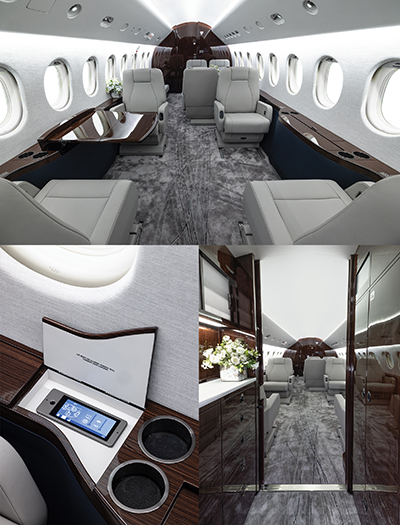
The Duncan Aviation-designed PSU overlay panels provide a clean, contemporary aesthetic and integrate seamlessly with new up and downwash LED lighting. Designed to dramatically update the look of the cabin while improving maintainability, they allow easier removal and installation compared to the original three-piece PSU panels. The light and air vent recesses feature a refined radiused design and are finished in matching material for a cohesive appearance and slightly improved sound damping compared to painted surfaces. Since we began installing these PSU overlay panels in the early 2000s, we have completed more than 65 installations on Falcon 900 and Falcon 2000 aircraft, in addition to offering a PSU overlay style that mimics the 7X/8X.
In the last decade, we’ve added a complementing upgrade by redesigning the drinkrails for a cleaner, more modern appearance that is both functional and streamlined. Switch panels are relocated beneath new lids on top of the drinkrails, and the cupholders are repositioned. This reduces the overall thickness and downward extension of the veneered drinkrail, enhancing the cabin’s streamlined, refined aesthetic.
When customers select both our PSU overlay panels and drinkrail modernization, they also have the option to incorporate the Duncan Aviation Finishing Touches hardware package. This package creates a unified, consistent look throughout the cabin by matching the profile and styling of handles in the galley, lavatory, window shades, and drinkrail lids, ensuring a harmonious design across the aircraft.
Want to see more? See our full Falcon refurbishment gallery.

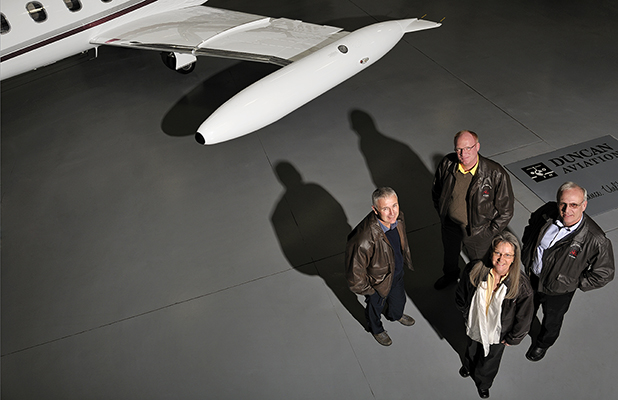
As Duncan Aviation grew our nose-to-tail aircraft service offerings, we identified early communication and coordination challenges inherent in managing complex aircraft projects across multiple shops. In 1991, we were the first in the industry to introduce the Project Manager role. This position established a single point of contact for customers. The Project Manager is responsible for coordinating all work on an aircraft, monitoring project milestones, and addressing issues that could affect the schedule or scope. The concept introduced a structured approach to aircraft project coordination that has since become a common practice throughout the aviation maintenance industry.

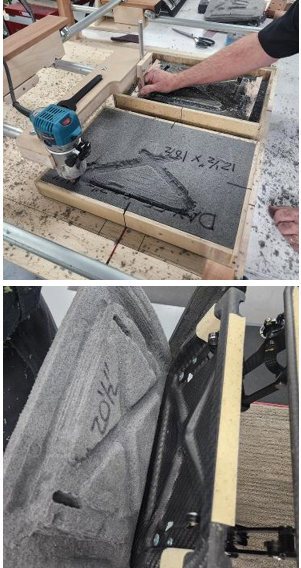
Continuous improvement and innovation have long shaped how Duncan Aviation operates. Over the years, we’ve tested new ideas, explored emerging markets, and introduced approaches that helped move the industry forward—along with a few that didn’t work as planned. Each effort added to a deeper understanding of what truly benefits aircraft operators.
Today, that mindset is embedded in our daily work through continuous improvement and LEAN practices focused on efficiency, quality, and consistency across all facilities. At the same time, we continue to look ahead—seeking new services, technologies, and solutions that help customers operate more productively and get greater value from business aviation.
In 2025, our Continuous Improvement team evaluated 500 submitted ideas and implemented 153 of those.