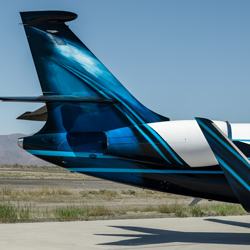
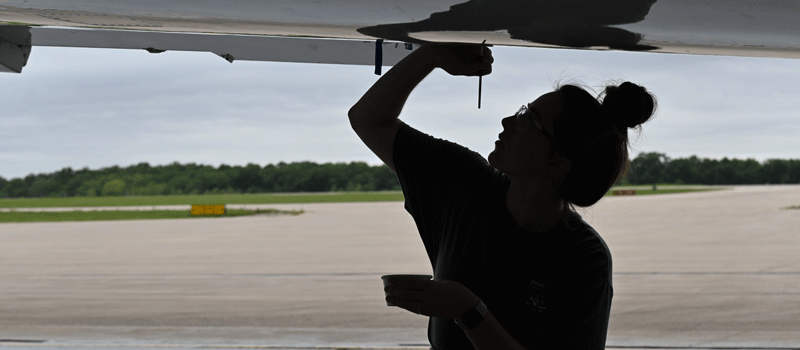
The paint applied to your business aircraft serves a far more critical role than simply making it look great. It is a key component of the aircraft’s overall maintenance and is there to protect the structure.
Every time an aircraft flies, it is exposed to a range of environmental stressors, including ultraviolet radiation, temperature extremes, moisture, pollutants, and airborne particulates such as sand and dust. Over time, these factors degrade the paint system, leading to fading, erosion, cracking, and chipping. Once the paint begins to fail, the underlying structure is left increasingly vulnerable.
One of the most significant risks associated with deteriorating paint is corrosion. On metal aircraft structures, corrosion can begin with just oxygen and moisture—two elements that are unavoidable in normal operations. Even minor breaches in the paint, such as small cracks around fasteners or seams, can allow moisture intrusion that leads to corrosion at a microscopic level. Left unaddressed, this corrosion can spread, weakening structural components and potentially compromising the aircraft’s integrity and safety.
Modern aircraft paint is engineered not only for durability and aesthetics, but also for protection. Advanced primers and pre-treatment processes play a crucial role in preventing corrosion, while high-quality topcoats shield the aircraft from environmental damage. However, these protective systems are not permanent and must be maintained as part of a comprehensive maintenance program.
Routine inspections are essential to identify early signs of paint wear, particularly in high-stress or high-flex areas. Addressing these issues early through paint touch-up and sealing can extend the life of the paint and prevent more costly repairs. Additionally, industry best practices recommend a full strip, inspection, and repaint every five to seven years. This process allows technicians to thoroughly assess the aircraft’s condition and address any hidden issues beneath the surface.
To keep your aircraft protected, be sure to do the following:
Ultimately, maintaining the paint on a business jet is an investment in the aircraft’s longevity, safety, and value—not just its appearance.
If you would like to learn more, come see my presentation, “Paint Is Maintenance: Protecting Aircraft Integrity and Market Value,” at 11 a.m. Wednesday, May 6, during the NBAA Maintenance Conference in New Orleans.
 Ryan Rudd
Completions Sales Rep
Challenger, Embraer, Global, Learjet Provo, UT (PVU)
+1 801.342.5582
Ryan Rudd
Completions Sales Rep
Challenger, Embraer, Global, Learjet Provo, UT (PVU)
+1 801.342.5582
November 2026
November 2026
October 2026
September 2026
August 2026