
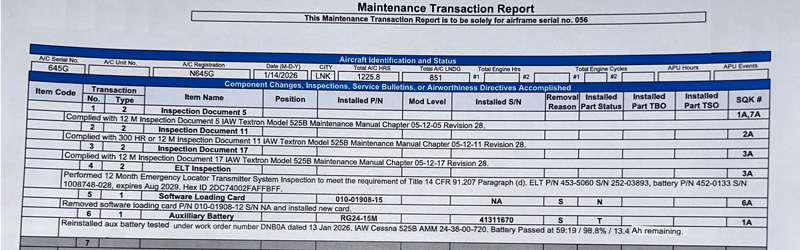
During a pre-purchase evaluation, the logbook plays a major role, and vague or incomplete statements become troublesome. It is here that the status of a logbook becomes a negotiable tool. The more complete and comprehensive the logbooks are, the more value they bring to the aircraft. If documentation is poor and many items remain open with no record of completion, the buyer will negotiate based on those open items. Otherwise, there could be unexpected expenses to correct them, which could delay the closing.
When valuing an aircraft, you either have complete, consecutive, and original logs or you do not.
Having facilitated many buyers and sellers through the pre-purchase evaluation, I understand the impact of logbook records on aircraft valuation in the secondary market. Lost logbooks can lead to a significant reduction in an aircraft's value or deter potential buyers from considering it.
If maintenance is not documented in the logbook, it's like it never happened.
An aircraft with thorough, detailed logbooks is more valuable in the secondary market than one with vague entries that leave performed maintenance open to interpretation. If an inspection facility cannot determine from the log entries whether a maintenance action was taken, a component was overhauled, or a component was inspected, it will require the owner to complete it again.
Inspections and component overhauls are often recorded in the aircraft’s maintenance tracking program as being done; however, there is no documentation of them in the logbooks. Without that history on record, it is as if it never happened. The only option available to an owner is to have the maintenance performed again or attempt to contact the maintenance facilities that worked on the aircraft to recreate the missing maintenance history. Your logbooks are then at the mercy of how well these facilities maintain their work histories for their customers.
During a pre-purchase evaluation, many aircraft have several appliance ADs (Airworthiness Directives) that remain as open status items. This happens when an owner receives an AD on an appliance that is not installed on the aircraft. Instead of having a mechanic enter the AD into the logbooks, stating it is not applicable, and then signing the entry, the AD is left undocumented. When it comes time to sell the aircraft, these open ADs will show up on the report as unfulfilled. If an appliance has been approved for installation on your aircraft, even if it isn’t, it will be in the database, and the open status will need to be cleared. The simple solution is to record every AD in the logbooks, whether or not it is applicable, and then sign.
If you are considering putting your aircraft up for sale on the secondary market, it would be to your advantage to have a thorough, complete records review conducted to ensure all bases are covered and that no outstanding maintenance issues or gaps remain. A comprehensive logbook review prior to a pre-purchase evaluation is a great way to ensure you won’t experience any delays or additional expenses due to a lack of documentation.
Duncan Aviation can provide customers with thorough record review and maintenance tracking through the Duncan Tracker services.
Contact your Duncan Aviation Airframe Service Sales Rep to add our Records Research to your maintenance event.
To learn more about Duncan Aviation’s Aircraft Sales & Acquisitions services, please contact me directly, or visit DuncanAviation.aero/AircraftSales or email us at AircraftSales@DuncanAviation.com.
November 2026
November 2026
October 2026
September 2026
August 2026