
For many small businesses, light multi-engine piston aircraft provide an efficient way to move employees, customers, and equipment. As mission requirements grow, however, limitations related to payload, range, weather capability, reliability, and maintenance support can lead owners to consider turbine-powered aircraft.
Moving from a piston twin to a larger turboprop is a significant step. The acquisition budget is generally higher, and the aircraft may introduce new training, maintenance, and regulatory requirements. At the same time, a well-matched turboprop can provide a meaningful increase in capability, dispatch reliability, and operational flexibility.
Light piston twins are often flown by owner-pilots, in part because their useful-load limitations may not support the cost or weight of carrying a professional flight crew. Larger piston twins may be flown by either professional pilots or owner-pilots, but many are older, legacy aircraft that require increasingly frequent, and sometimes expensive, maintenance visits.
These aircraft continue to serve many companies well, but their useful load, range, and single-engine performance can create challenges for certain mission profiles. Payload restrictions may force operators to leave behind passengers, baggage, equipment, or fuel. Range limitations can require additional stops, while marginal single-engine performance may reduce operational flexibility.
Many piston twins are equipped with weather radar and ice-protection systems. However, the age and capability of those systems can vary considerably. Newer turbine aircraft generally offer more modern systems and may provide a higher level of protection when operating in challenging weather and environments.
Transitioning to a turboprop can expand the practical mission envelope. Depending on the aircraft selected, an operator may gain a longer range, higher useful load, improved high-altitude performance, and access to airports with shorter or unimproved runways. Those capabilities can allow a business to reach additional markets and transport more people and equipment without making as many compromises.
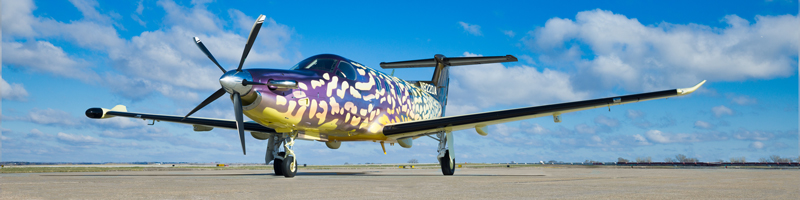
Owners considering turbine aircraft can choose from a wide variety of single-engine and twin-engine turboprops. Many of these models remain in production, providing options across a broad range of budgets and mission requirements.
By comparison, very few piston twins are currently being produced. As the existing fleet ages, finding replacement parts, experienced technicians, and service centers with deep knowledge of a particular model can become more difficult.
Newer turbine aircraft typically benefit from more established factory support, organized maintenance programs, and a broader selection of qualified service facilities. That support network can be an important consideration when comparing aircraft—not only at the time of purchase, but throughout the ownership period.
Many turboprop models still in production have also received significant technology upgrades, with newer models featuring safety enhancements such as auto throttle, auto land, advanced radar and weather detection systems, ice detection, Garmin G3000 panels, and more. Newer models are in high demand, which helps maintain a strong resale value.
Fuel availability is another factor. The future of 100LL aviation gasoline remains an ongoing industry issue, while turboprops operate on widely available jet fuel. Fuel type alone may not justify changing aircraft, but it should be considered as part of a long-term ownership analysis.
A turboprop is not automatically less expensive to own than a piston twin. Maintenance costs depend on the aircraft’s age, condition, utilization, inspection status, engine program, and operating environment. However, operators transitioning from certain high-performance or pressurized piston twins may find turbine maintenance more predictable.
Many turboprops are powered by engines in the Pratt & Whitney Canada PT6 series. The PT6 has earned a strong reputation for reliability and is used across a wide range of aircraft and operating environments.
High-performance piston engines work hard to produce the power required for demanding missions. Their maintenance needs can be affected by operating technique, temperatures, cylinder condition, turbocharging systems, and other variables. Turbine-engine maintenance is generally structured around established inspection intervals and major scheduled events, making long-term planning more predictable.
Turboprop airframes are also commonly designed for demanding operations, including high-altitude flights, challenging weather, and, for some models, operations from unpaved airports. Between major scheduled inspections, a properly maintained turbine aircraft may require fewer unscheduled shop visits than an aging pressurized piston twin.
In some cases, owners moving from a pressurized piston twin to a single-engine turboprop experience lower maintenance costs, less downtime, and higher dispatch reliability. That outcome is not universal, which is why a thorough pre-purchase evaluation and detailed operating-cost analysis are essential.
Greater aircraft capability also brings additional ownership responsibilities. Operators should understand those requirements before completing an acquisition rather than addressing them after the aircraft enters service.
Many turboprops have service ceilings that allow them to operate in Reduced Vertical Separation Minimum, or RVSM, airspace. Access to RVSM altitudes can improve routing and fuel efficiency, but it may require specific aircraft approvals, operating authorizations, maintenance procedures, and pilot training.
Turbine operators may also benefit from an FAA-approved Minimum Equipment List. An MEL identifies the conditions under which an aircraft may be legally operated with certain equipment temporarily inoperative. Establishing and administering an MEL can be complex, but it can also provide greater operational flexibility by preventing an otherwise safe aircraft from being unnecessarily grounded.
Several service providers assist owners with the paperwork, manuals, and authorizations associated with turbine operations. Maintenance facilities that specialize in turboprops also tend to offer more formal maintenance-planning and consulting services.
New turbine owners often find that maintenance tracking becomes more structured. Inspections, component times, life-limited parts, service bulletins, and scheduled maintenance events are closely monitored, which helps to minimize downtime. This additional discipline requires attention, but it can also improve visibility into the aircraft’s maintenance budget.
Pilot qualifications and insurance requirements should be evaluated early in the acquisition process. A turbine aircraft may require additional training, annual simulator events, mentor-pilot time, or the use of a professional crew.
Even when an aircraft can legally be flown by one pilot, the owner should determine whether single-pilot operations are appropriate for the company’s missions, schedule, and risk profile. Aircraft performance is only one part of the decision. Pilot experience, workload, weather exposure, and passenger expectations also matter.
Insurance availability and premiums may vary significantly based on the aircraft model and the pilot’s experience. Obtaining preliminary insurance guidance before selecting an aircraft can help prevent unexpected training requirements or operating restrictions.
The advantages of a turboprop are realized only when the aircraft is matched appropriately to the mission. Buyers should begin by documenting how the aircraft will be used, including typical and maximum passenger loads, baggage and equipment requirements, trip lengths, runway conditions, seasonal weather, and annual utilization.
A larger aircraft may offer more capability, but it may also increase fuel consumption, hangar requirements, training costs, and scheduled inspection expenses. Conversely, selecting an aircraft that is too small can recreate the same payload and range limitations that prompted the upgrade.
A comprehensive acquisition analysis should consider more than acquisition price. Buyers should evaluate near-term inspection exposure, engine and propeller times, potential systems obsolescence issues, cockpit technology, paint and interior condition, maintenance history, parts support, insurance, training, operational history, pedigree, and expected resale demand. A lower-priced aircraft with significant upcoming maintenance may ultimately cost more than a better-positioned example with a higher purchase price.
During more than 37 years of helping clients acquire and sell aircraft, I have assisted a lot of owners moving from high-performance piston singles and twins into turbine equipment. The transition requires careful planning, but the corresponding gains in capability, reliability, comfort, and operational flexibility can be substantial.
For a small business, the right turboprop may make it possible to reach new locations, carry more personnel and equipment, operate more consistently in variable weather conditions, and reduce the disruptions associated with an aging piston aircraft. The key is to approach the decision as a mission and ownership analysis—not simply as an upgrade to a larger or faster airplane.
When the aircraft, operating structure, and budget are properly aligned, moving to a turboprop can provide a durable platform for the company’s evolving transportation needs.
October 2026
September 2026
July 2026
July 2026
July 2026